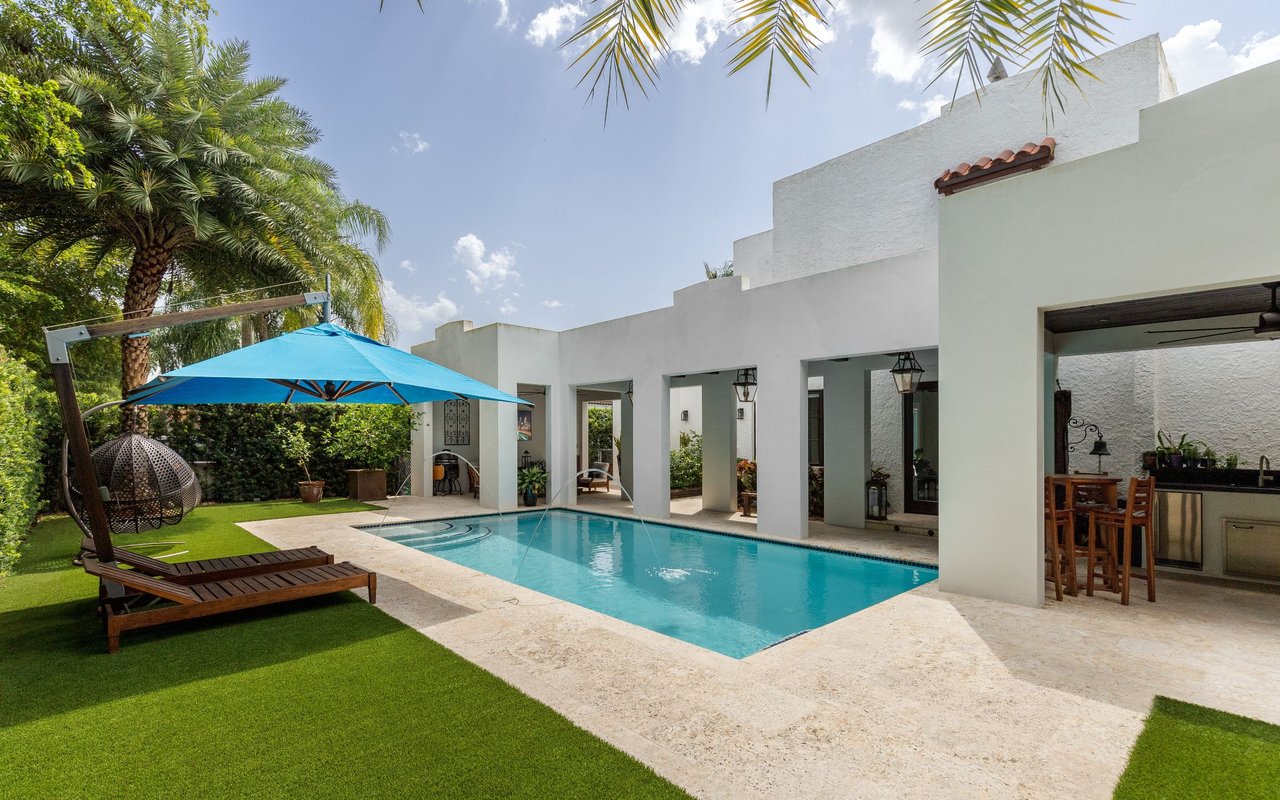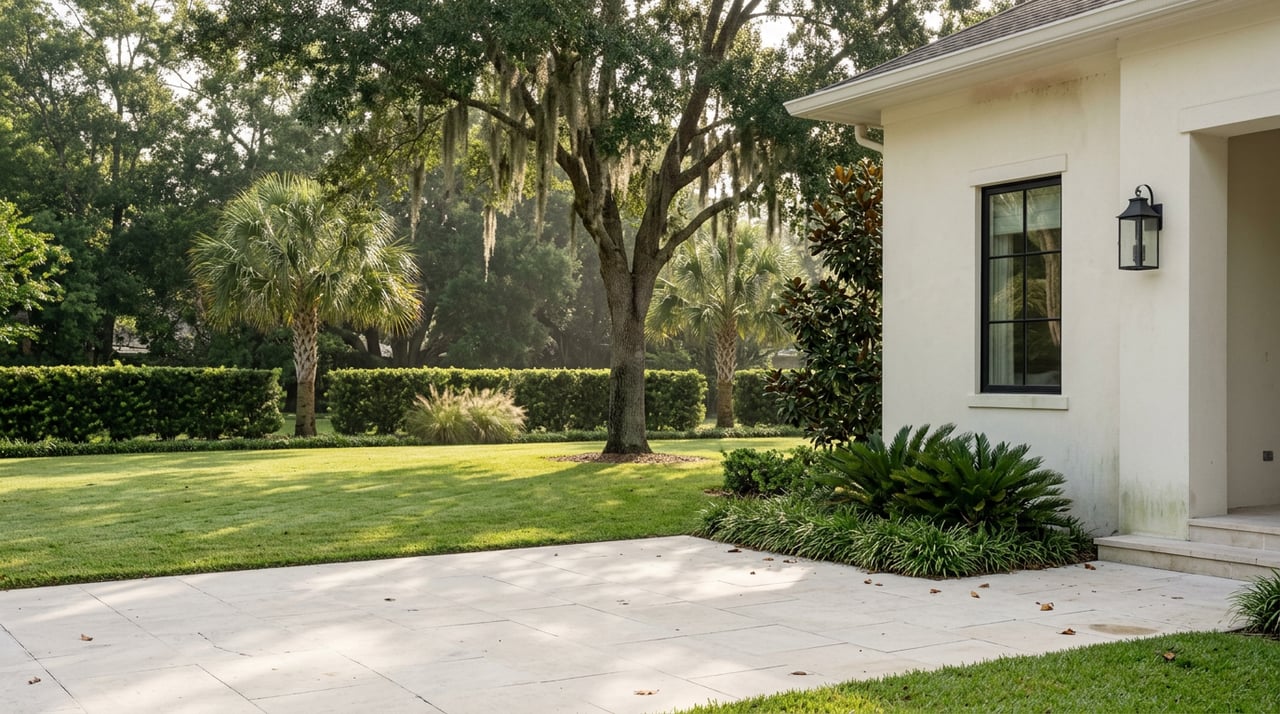
A 5.7-acre tract on Markham Woods Road listed this year for $1.75 million, a little over $300,000 an acre for upland ground with no water frontage. Look at the corridor's recent history and the same acreage bracket has commanded far more: a nine-and-a-half-acre lot with roughly 850 feet of frontage on Rice Lake listed for $10 million in early 2025, working out to more than $1 million an acre, while another landlocked tract of just under nine acres on Markham Woods Road listed around $5 million that same year. Similar acreage, prices that refuse to scale with size in any straightforward way.
Size alone explains almost none of that spread. The gap isn't really about how many acres are on the deed. It's about what the county will legally let happen to that ground, and whether it touches water.
That distinction matters more on Markham Woods than almost anywhere else in Seminole County, because the zoning code underneath this corridor cuts two completely different ways depending on which side of a transaction you're standing on.
The Zoning Number Every Acreage Listing Is Built On
Most of the large lots along Markham Woods Road carry an A-1 agricultural designation. Seminole County's zoning table sets the minimum lot size for A-1 at one acre, with a required 150-foot width at the building line. That single number, one acre, is the quiet mechanism behind nearly every acreage listing in this corridor.
Compare that to the county's other rural classifications, which step up fast: A-3 requires a three-acre minimum, A-5 requires five acres, and A-10 requires ten. The wider the gap between a parcel's total size and its zoning minimum, the more room exists to divide it later.
| Zoning District | Minimum Lot Size | What It Means on the Corridor |
|---|---|---|
| A-1 (Agriculture) | 1 acre | Covers most Markham Woods Road estate lots; allows horses, guest structures, no mandatory HOA |
| A-3 (Rural) | 3 acres | A meaningfully harder parcel to subdivide down |
| A-5 (Rural) | 5 acres | Effectively estate-scale as a subdivision floor |
| A-10 (Rural) | 10 acres | Largest holdings, least subdivision exposure |
Seminole County publishes this table directly, and it's worth reading in full before you assume what your acreage guarantees you.
The Same Rule Cuts Both Ways
Here's where the corridor gets interesting. A-1's one-acre minimum is exactly why some sellers market their acreage as permanent privacy: no neighbors, no homeowner association, room for a barn and a guesthouse with no cap on square footage. Several listings along the corridor lean hard into that pitch, treating agricultural zoning as a synonym for freedom.
That same $1.75 million, 5.7-acre listing makes the opposite case using the identical zoning. It's described as A-1 with a Planned Development future land use overlay, positioned as workable either as a single large estate or, per the listing itself, as a boutique enclave with the potential to create up to five luxury estate homes. Same acreage, same code, marketed as both a forever-private lot and a developer's opportunity, because both readings are legally available under the current designation.
That's the part a buyer comparing acreage listings needs to sit with. The zoning doesn't promise privacy. It sets a floor, one acre per homesite, and lets the market decide what happens above that floor. A five-acre A-1 parcel next door to you could stay one estate for decades, or it could become five houses without anyone rezoning anything, because the zoning already allows it. A ten-acre A-10 parcel next door would need a much larger assemblage to reach the same outcome, simply because its floor sits higher.
What Water Frontage Does to the Math
Once you separate subdivision potential from privacy, the price-per-acre spread across these examples starts making more sense.
The 5.7-acre parcel near Heathrow Elementary, landlocked and close to the International Parkway employment corridor, listed this year at around $307,000 an acre. The landlocked nine-acre tract that listed in 2025 priced out closer to $556,000 an acre. The nine-and-a-half-acre Rice Lake parcel that listed in early 2025, with roughly 850 feet of frontage, priced out above $1 million an acre. None of these numbers move in lockstep with total acreage. What moves them is water.
Lake frontage is scarce in a way that raw upland acreage simply is not. Seminole County still has one-acre-minimum parcels within reach of I-4 and the Heathrow master-planned community. It has very few remaining parcels with direct frontage on Lake Markham, Rice Lake, or the Wekiva River that haven't already been built out. Steady demand tied to the International Parkway employment base keeps the broader acreage market active on its own, but frontage is what pushes a specific listing from large lot into irreplaceable.
If you're comparing two acreage listings and one carries a materially higher per-acre price, the first question isn't what makes this lot better. It's what does this lot touch that the other one doesn't.
Questions Worth Asking Before the Acreage Wins You Over
A few checks turn a romantic acreage tour into an informed offer:
- Is the parcel's future land use designation straight A-1, or does it carry a Planned Development overlay? The PD designation is often what actually opens the door to county approval for subdividing, not the A-1 zoning by itself.
- How large are the adjoining parcels, and are they held by a single owner? A neighboring five-acre A-1 tract carries more subdivision exposure over time than a neighboring ten-acre A-10 tract, regardless of how private both feel today.
- Does an HOA or POA apply? Some gated communities along the corridor, including platted developments like Markham Woods Enclave, carry a quarterly POA fee for gated access and common areas even though most standalone acreage lots outside a platted community carry no HOA at all.
- Does the parcel actually touch water, and what are the deeded frontage rights? A quoted acreage number can hide whether you're buying lake access or simply a view of someone else's.
Does buying five acres on Markham Woods Road guarantee that your surroundings never change? No. Zoning sets what's legally possible for a parcel, not what a future owner decides to do with it. Because A-1 zoning only requires a one-acre minimum, a neighboring five-acre A-1 tract can be replatted into multiple homesites without any rezoning at all, while a neighboring A-5 or A-10 parcel would require a far larger assemblage to reach the same outcome.
Does agricultural zoning mean I can keep horses on any acreage lot in the corridor? Generally yes on A-1 and Rural-classified parcels, though Seminole County requires barn and livestock structures to sit at least 50 feet from front, side, and rear property lines and at least 100 feet from any residential structure on an adjacent lot. Confirm the buildable envelope on a specific parcel before assuming where a barn can go.
The acreage figure on a Markham Woods listing is a starting point, not an answer. What actually determines whether your five acres stays five acres of privacy or becomes a neighbor's five future homesites is buried in the future land use designation, and what determines whether you're paying $300,000 or $1 million an acre often comes down to a strip of lake frontage the listing photo doesn't fully show.
If you're comparing acreage along Markham Woods Road and want a second set of eyes on what a specific parcel's zoning actually allows, before or after you fall for the oak canopy, Tara Mruk works this corridor closely enough to help you read a listing the way a local would. Schedule a free consultation and bring the parcel numbers.