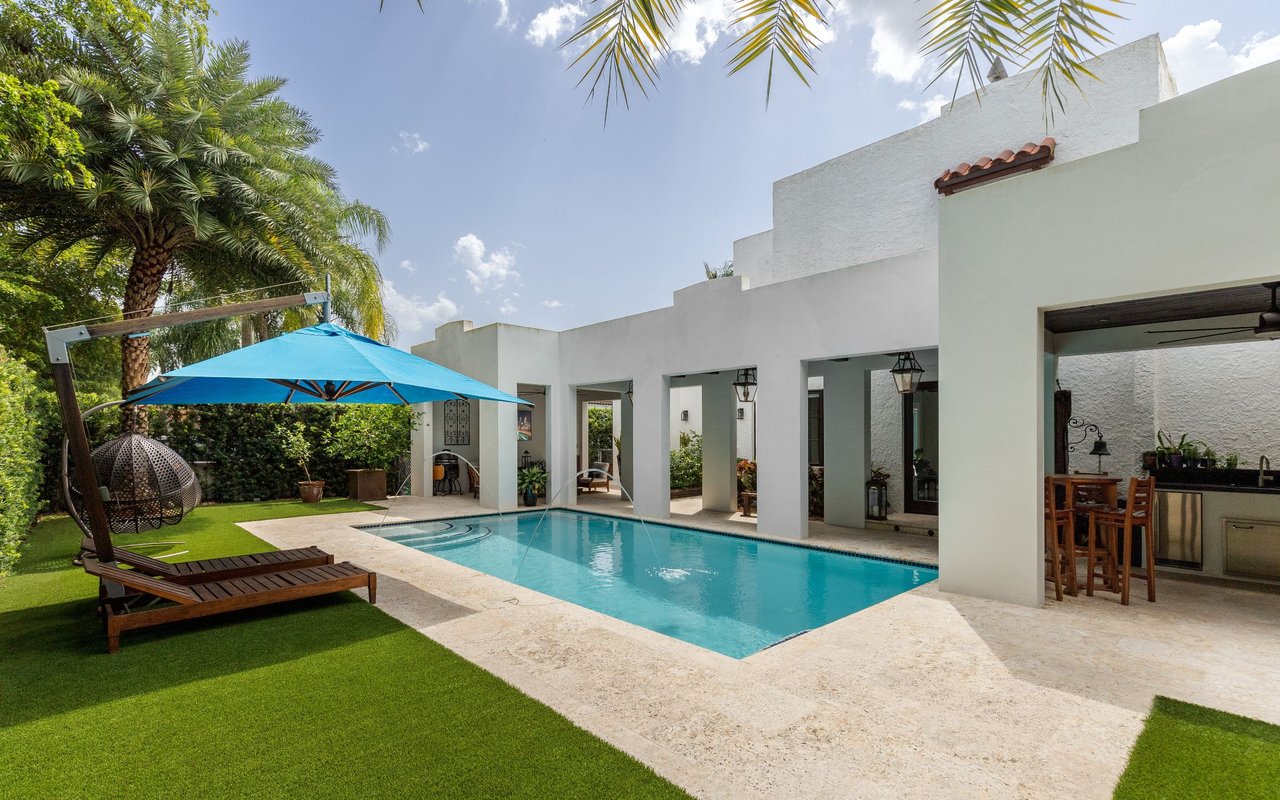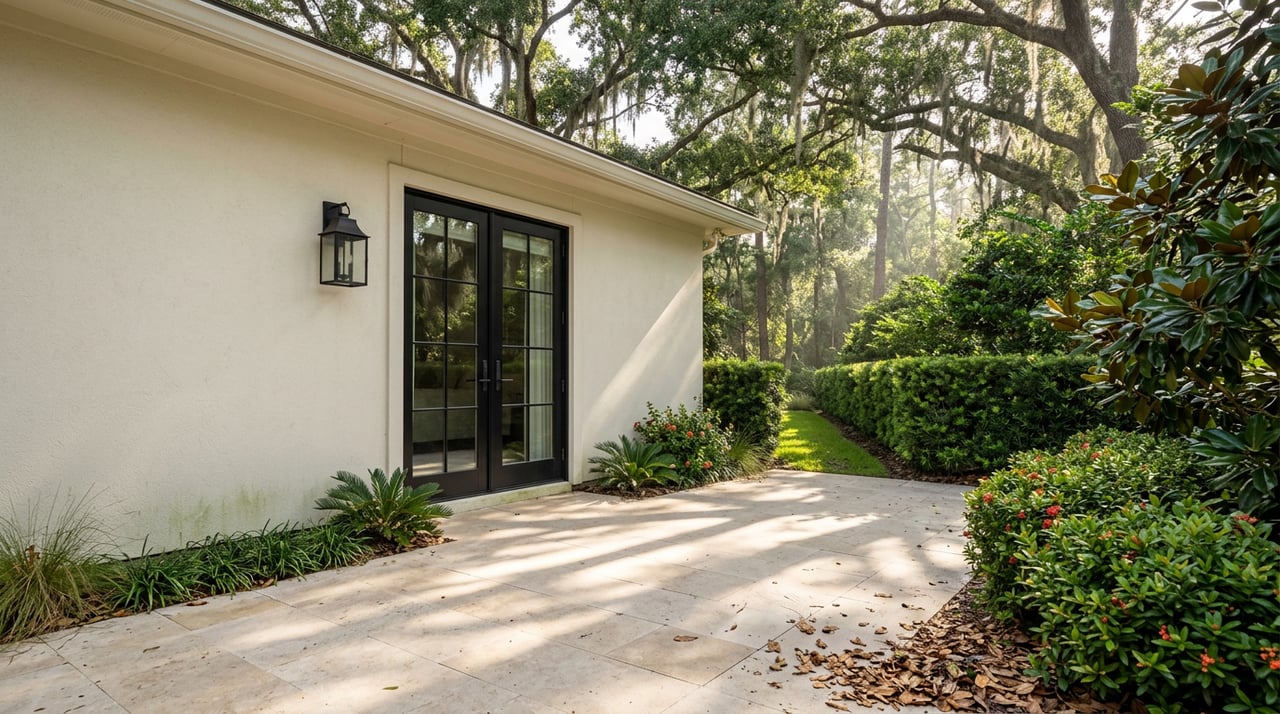
A buyer touring the Markham Woods Corridor sees oak canopy, one-acre setbacks, and a listing price that reflects the land more than the house. What that price does not show is the piece of infrastructure quietly buried in the side yard, and the state regulatory schedule attached to it.
Almost every acreage home along Markham Woods Road runs on a private well and a septic tank. That is not a footnote. It is the single detail that shapes maintenance, closing conditions, monthly cost, and resale for the next fifteen years.
The One Line In A Listing That Changes Everything
Open any active Markham Woods Road listing and scroll to the utility block. You will see something close to this pattern, borrowed from a 9.25-acre parcel currently on the corridor and a smaller 4-bedroom on the same road:
| Listing field | What it says | What it means for the buyer |
|---|---|---|
| Sewer | Septic Tank / Septic Needed | No central sewer at the property. Wastewater is treated on-site. |
| Water Source | Well / Well Required | No municipal water. A private well pump, tank, and treatment system belong to the home. |
| Zoning | A-1 | Seminole County agricultural, with a one-acre minimum lot size along this stretch of the corridor. |
| Utilities | Electricity Available | Power is the only public utility running to the parcel. |
The A-1 zoning is why the corridor looks the way it does. It is also why the county cannot simply extend a sewer main down Markham Woods Road without a project, a funding source, and a vote. The infrastructure question follows every single-family home here.
Why The Corridor Runs On Wells And Tanks
Most of Markham Woods sits inside the Wekiva Priority Focus Area, a springshed boundary that Florida's Department of Environmental Protection drew to protect groundwater feeding Wekiwa Springs. Rural, agricultural, and estate parcels developed before central utilities reached this side of Seminole County, and A-1 zoning has kept new density from forcing sewer extension.
That was fine when the regulatory pressure was light. It stopped being fine after the 2016 Florida Springs and Aquifer Protection Act and House Bill 1379 in 2023 put timelines on the map.
The 2038 Clock
At a December 9 work session, the Seminole County Board of County Commissioners heard an update on the county's septic-to-sewer and advanced septic programs from Environmental Services director Kim Ornberg, Utilities director Johnny Edwards, and consultant C. Robert Reiss. The headline number for Markham Woods buyers: the county has until 2038 to complete remediation of septic tanks in both the Wekiva PFA, which contains 3,850 septic tanks under county jurisdiction, and the Gemini Springs Basin Management Plan area, which has 1,259 septic tanks under the county.
Remediation is not a suggestion. Two options were discussed, including eliminating septic tanks through connection to a central sewer system or replacement of septic tanks with advanced on-site septic treatment units. Every affected parcel will end up in one bucket or the other before the deadline.
The first tranche is already funded. Phase 1 of this project would convert more than 800 septic tank properties in the Wekiva Basin located in southwest Seminole County from septic systems to sewer at a cost of $40 million, after grant funding. The county applied for a $20 million grant with the St. Johns River Water Management District to seed that first phase.
If you are buying inside the Wekiva PFA, you are buying into that schedule.
What The $10,000 Incentive Actually Buys
Seminole County's Septic Upgrade Incentive Program is the buyer-facing half of the plan. Homeowners in eligible areas of unincorporated Seminole County without central sewer can receive up to $10,000 in financial assistance to voluntarily upgrade their septic systems with approved nitrogen-reducing enhancements. These upgrades help protect the springs, rivers, and groundwater. Funding is first-come, first-served until the County's $2.2 million grant from the Florida Department of Environmental Protection is fully used.
Ten thousand dollars is meaningful, and it is not the whole ticket. When a Markham Woods parcel is eventually converted from septic to central sewer, the cost lives in three buckets that a Central Florida contractor recently laid out for the wider Orlando market:
- A sewer connection impact fee that typically ranges from $2,500 to $5,000 for a single-family home, paid to the utility authority.
- Abandonment costs generally run $500 to $1,500 depending on tank size and accessibility for the old septic tank, which must be pumped and either filled or collapsed under Florida code.
- Connecting your home's internal plumbing to the new sewer lateral at the street can range from $3,000 to $12,000, and this is usually the largest variable.
Add those together on a Markham Woods lot where the road frontage is long and the house sits well back, and the plumbing run alone can push the top end. This is the number the median price does not tell you.
The MSBU Question Nobody Asks Until Closing
Here is the mechanism that catches move-up buyers off guard. Seminole County typically pays for sewer extension into a neighborhood through a Municipal Service Benefit Unit, funded by a non-ad valorem assessment allocated to the benefiting properties on an equitable cost sharing basis. The county's MSBU manual is explicit that water/sewer utility transmission line extension is one of the improvement categories funded this way.
Translated: when your stretch of Markham Woods is scheduled for conversion, your parcel will likely receive an assessment that shows up on the tax bill for years. The seller is not required to know the schedule. The county's schedule, though, is public, and a listing agent working the corridor should be able to tell you whether the property is inside the current Phase 1 boundary or the next one.
That question, asked before you write the offer, is worth the entire cost of a good agent.
Reading A Markham Woods Listing Before You Write An Offer
Use the utility line as the start of due diligence, not the end. Five questions worth asking on any acreage home between the Markham Trailhead at 8515 Markham Road and Longwood-Markham Road:
- How old is the drainfield, and when was the tank last pumped? Florida drainfields have a working life. A twenty-year-old field on a heavily used estate is a repair conversation, not a remodel conversation.
- Where is the well casing, and when was the last water quality test? Iron, sulfur, and nitrate levels vary parcel by parcel on this side of the county. Test results should be recent.
- Is the parcel inside the Wekiva Priority Focus Area? The boundary is public and mapped. Being inside changes both the incentive eligibility and the remediation obligation.
- Is the parcel included in the county's current Phase 1 septic-to-sewer conversion, or in a later phase? The answer determines whether an MSBU assessment is a five-year concern or a twelve-year one.
- Has the seller applied for the Septic Upgrade Incentive Program? If the tank is old and the parcel is eligible, an upgrade completed before closing can transfer significant value.
None of these questions appear on a portal. All of them shape the true cost of the home.
Where This Leaves The Buyer
The Markham Woods Corridor is one of the few places in Seminole County where a family can hold real acreage with mature canopy inside a top-rated school feeder. The privacy is the product. The private well and septic are part of what makes that privacy possible, and part of what a buyer is agreeing to maintain.
The mistake is assuming the infrastructure question is settled because the house has stood since 1978 and the tank has never backed up. The state has already decided it is not settled. Reading the utility line correctly at offer time is the difference between inheriting a plan and inheriting a surprise.
Frequently Asked Questions
Does every home on Markham Woods Road need to convert to sewer by 2038? Not every home. The 2038 date applies to septic tanks inside the Wekiva Priority Focus Area under county jurisdiction. Parcels outside the PFA boundary follow a different track, and some parcels will meet the standard by installing an advanced nitrogen-reducing system rather than connecting to central sewer.
Can a buyer take over a seller's Septic Upgrade Incentive Program application? The program is administered by Seminole County Environmental Services and is tied to the property. Buyers considering a home mid-application should call [email protected] or 407-665-5798 before closing to confirm status and eligibility, since funding is first-come, first-served against a fixed grant pool.
Does being on well and septic affect financing? Conventional and jumbo lenders on Markham Woods typically require a satisfactory well water potability test and a septic inspection as conditions of clearing to close. These are ordered during the inspection window, not at final walkthrough, and results occasionally reopen negotiation on price or repairs.
If you are weighing a home on the Markham Woods Corridor and want a clear read on the parcel's utility profile, its position inside the Wekiva PFA, and what the next fifteen years of ownership look like on paper, Tara Mruk will walk the property with you and pull the county records before you write. Schedule a free consultation to start with the questions the listing does not answer.